Let’s cut through the noise right now: navigating concrete mixer prices in South Africa isn’t about finding the cheapest sticker price. That’s a rookie mistake that has sunk more budding construction businesses than any economic downturn. The true cost of a mixer is a sprawling landscape of upfront capital, operational grind, and resale reality. Viewing this purchase as a simple transaction is a profound error in judgement; it is a strategic deployment of capital that will either become the engine of your growth or an anchor on your profitability for years to come. This guide isn’t just a list of numbers—it’s a battle plan. We’re going to dissect the market tiers, expose the hidden financial traps, and arm you with the analytical framework to make an investment that doesn’t just mix concrete, but mixes profit into every cubic meter you pour.
Deconstructing the Price Spectrum: From Basic Drum to Autonomous Powerhouse
The market presents a tiered hierarchy, and your business plan must dictate your tier, not the other way around. Blurring these lines is a recipe for either wasteful overspending or crippling under-capacity.
The Entry-Level Arena: Manual and Tilt Drum Mixers
At the most accessible end, you find the familiar manual and hydraulic tilt drum mixers. With prices starting from a few thousand Rand for very small units, the appeal is obvious: minimal capital outlay. However, this low barrier to entry comes with significant operational constraints. These mixers are labor-intensive, requiring manual loading of materials and water, which introduces inconsistency in mix quality. Their output is limited, making them suitable only for the smallest of jobs—a backyard patio, a single small foundation. For any builder with aspirations of growth, this tier is a temporary foothold, not a foundation. The total cost of ownership here is disproportionately high when measured in labor hours per cubic meter of concrete produced.
The Professional Workhorse: Standard Towable and Self-Loading Mixers
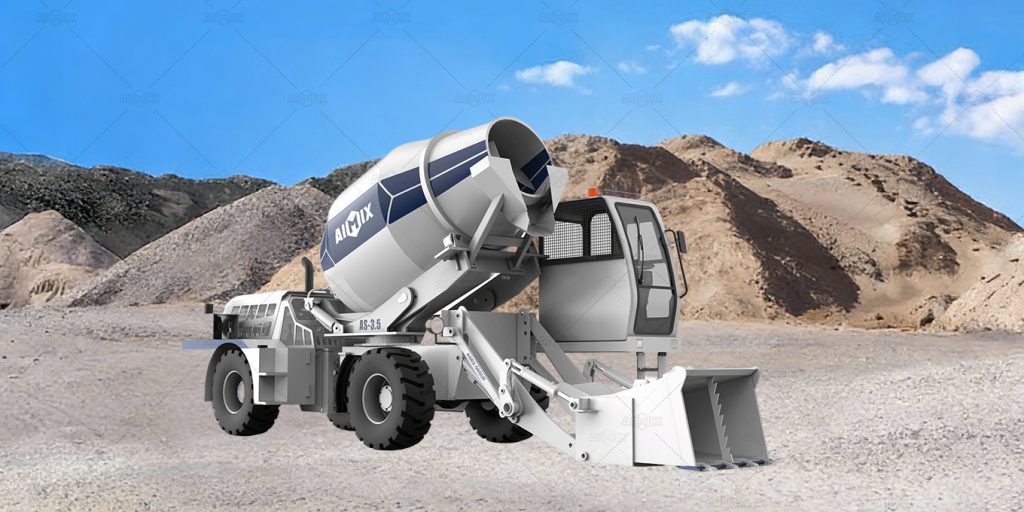
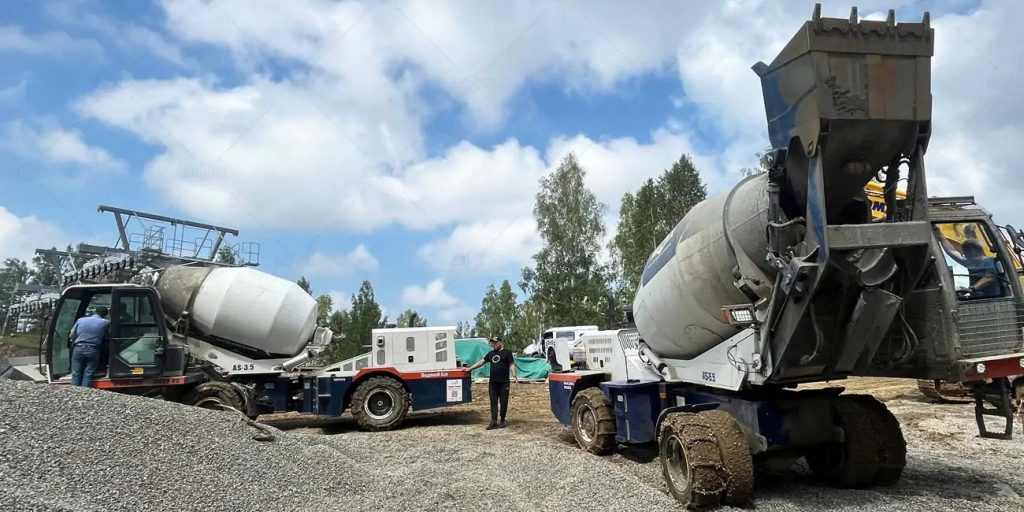
This is the decisive tier for the serious contractor. Here, prices escalate into the tens of thousands to several hundred thousand Rand, and for transformative reasons. A standard towable mixer with a diesel engine offers reliable, consistent output for a small crew. The seismic leap, however, is to the self-loading mixer. This machine is a revelation—a mobile batching plant. Its premium self loading concrete mixer price buys you operational sovereignty. It loads its own aggregates and cement, meters water precisely, and mixes on demand. It obliterates the need for a separate loader and drastically reduces labor. The investment here is not in a mixer, but in a systemic efficiency upgrade that pays for itself by enabling you to complete more work, of higher quality, with a smaller team.
The Hidden Calculus: Total Cost of Ownership is Your True Price Tag
If you’re still comparing invoice totals, you’ve already lost. The real financial battle is fought in the trenches of ongoing costs that the initial price tag deliberately obscures.
The Relentless Grind of Operational Expenditure
This is where cheap equipment reveals its true, expensive nature. A low-cost mixer might have an underpowered engine that gulps diesel. Its drum blades and liners might be made of inferior steel, wearing out after a few hundred mixes and requiring costly, frequent replacement. Downtime is the silent killer of profit. A machine that breaks down regularly doesn’t just need repairs; it costs you contracts, damages your reputation for reliability, and forces you to pay crews for standing around. A robust, professionally engineered mini concrete mixer, while more expensive upfront, is designed for this relentless environment. Its components are built to last, its engine is tuned for fuel efficiency, and its service points are accessible for preventative maintenance. Its higher price is a direct investment in uptime, which is the single most valuable commodity on any construction site.
Residual Value and Brand Equity: Your Exit Strategy
Every piece of equipment is a capital asset that will one day be sold or traded. This is a financial reality most buyers ignore. A reputable, well-maintained concrete mixer machine from a known brand holds its value stubbornly well in the South African secondary market. Buyers understand its pedigree and are willing to pay a premium for predictable performance. A no-name, depreciated machine, however, becomes a nearly valeless liability. Its resale value plummets because it represents an unknown risk. The premium you pay for quality isn’t evaporated; a significant portion is stored as latent equity in the asset itself. Furthermore, operating reliable, professional-grade equipment enhances your own company’s brand equity, allowing you to command better project prices. Your mixer isn’t just a cost; it’s a statement.
The Strategic Acquisition: Aligning Investment with Business Ambition
The final decision is a mirror held up to your business ambition. It requires brutal honesty about where you are and a clear vision for where you’re going.
Matching Machine to Market Reality
Are you a specialist in high-volume, repetitive projects like paving or low-cost housing developments? Then a high-output self-loader or a volumetric mixer might be your profit engine, its cost amortized over massive volume. Are you a general contractor tackling diverse, shorter-duration projects? A versatile, robust towable mixer offers the flexibility you need. Investing in a massive, complex machine for small, scattered jobs is as foolish as trying to build a shopping mall with a 100-liter drum mixer. You must analyze your project pipeline, average pour sizes, and site constraints with clinical detachment. The right machine feels almost effortless because it is perfectly scaled to your operational rhythm.
The Financing Filter and Partnership Principle
How you pay is as revealing as what you buy. Cash might be king, but strategic financing can be the general that wins the war. It allows you to preserve working capital while putting the asset to work generating revenue to cover the payments. Crucially, view your supplier not as a vendor, but as a potential partner. A supplier who offers comprehensive after-sales service, readily available parts, and operator training is adding immense intangible value to the transaction. This support network mitigates risk and protects your investment. The cheapest supplier often abandons you the moment the invoice is paid; the right partner ensures your large concrete mixer remains a productive asset for its entire lifecycle. In the dynamic South African market, your concrete mixer is more than a tool—it’s the cornerstone of your operational capability. Choose not for today’s price, but for tomorrow’s profit.